Searching for dependable chimney sweep and repair experts in Arizona? Choose NFPA 211-compliant technicians who carry out Level I-II examinations with camera imaging, soot elimination, draft testing, and thorough documented reports. Be sure to check an active Arizona ROC license, matching license number on estimates, and verified insurance (GL $1M/$2M, workers' comp). They should maintain caps, crowns, flashing, and liners, utilizing vapor‑permeable sealants designed for monsoon moisture and desert heat. Insist on upfront pricing before work begins, plus following-storm inspections. Keep going for helpful selection guidance and costs.
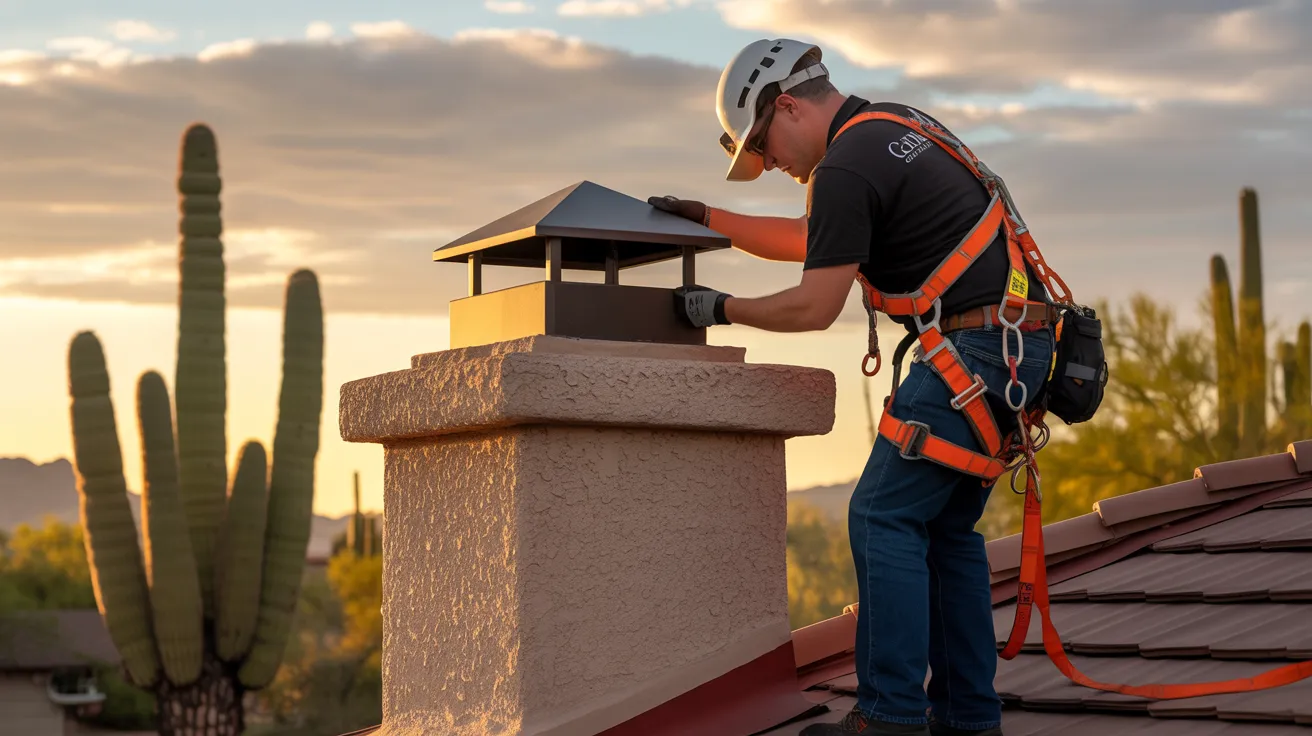
Key Takeaways
- Work with licensed and insured chimney experts; make sure to check their license information, insurance documentation, and disciplinary history using the Arizona Registrar of Contractors lookup.
- Anticipate NFPA 211-compliant evaluations (Level 1/2), with camera imaging, draft testing, and detailed photo-documented reports containing repair recommendations based on code and upfront pricing.
- Our services include creosote removal, chimney liner inspection and replacement, repairs to caps, crowns, and flashing, breathable masonry waterproofing, and safety inspections for CO venting and proper flue sizing.
- Standard Arizona pricing ranges from $175-$300 for Level 1, $250-$500 for Level 2, and $125-$250 for dryer vent cleaning; service visits typically last 60-150 minutes depending on the scope of work.
- Monitor critical indicators: smoke-filled spaces, powerful creosote smells, compromised chimney caps, animal noises, or excessive dryer heat - arrange for immediate inspection and maintenance.
Understanding Why Chimney Maintenance is Essential in Arizona's Climate
Although Arizona is recognized for dry heat, its broad temperature fluctuations plus dust and monsoon moisture can hasten chimney degradation and create safety dangers if you miss maintenance. You face UV degradation that breaks down crowns, dries out sealants, and weakens chase covers. Desert creosote from wood combustion blends with fine dust, forming abrasive, hygroscopic deposits that attract monsoon humidity, encouraging corrosion and flue liner damage. Thermal shock from day-night swings strains masonry joints and metal components, elevating water penetration and draft instability.
Comply with NFPA 211: plan annual inspections and perform necessary cleaning to ensure flue surfaces within safe clearances and protect proper draft. Inspect cap functionality, storm collars, and flashing to prevent wind-driven rain and embers. Keep up spark arrestors and damper function to lower ignition risk and enhance combustion efficiency.
Services You Can Expect From Certified Chimney Professionals
Considering Arizona's demanding environment, licensed specialists perform NFPA 211-compliant maintenance that ensure systems safe, efficient, and up to code. The service includes a detailed visual and video assessment recording spacing, outlets, and airflow routes. Specialists will conduct buildup elimination using specialized removal tools suitable for your ventilation system, then verify flow with diagnostic equipment. A chimney liner assessment examines for cracks, gaps, and corrosion, followed by suggestions for appropriate liner replacement if issues are present. Technicians repair chimney components, protect brickwork with vapor-permeable coatings, and repair internal components to ASTM and manufacturer specs. Experts examine carbon monoxide pathways, confirm proper dimensioning per code, and record results with detailed documentation outlining recommended improvements.
Finding Qualified, Insured, and Trusted Technicians
Before scheduling any service, make sure to confirm the contractor's active Arizona Registrar of Contractors license and check for any violations. Obtain evidence of valid general liability and workers' compensation insurance, and request certificates designating you as the certificate holder. These steps protect you from building code issues, damage to your property, and liability exposure.
Verify State License Requirements
Why is licensing so important? It safeguards you from questionable operations and confirms technicians adhere to Arizona's trade standards. Before scheduling any service, complete state verification through the Arizona Registrar of Contractors (ROC). Access the ROC's licensing lookup to confirm the company's license status, classification like residential or commercial, and scope that covers chimney sweep, masonry repair, or lining work. Check the effective dates, enforcement history, and complaint history. Confirm the license number on the estimate aligns with the ROC record and business name.
Determine who will be present at the premises and verify that every entity - including both main contractors and subcontractors - maintains the necessary certifications. Request written documentation of credential documentation in your contract. If any concerns emerge, do not continue. Select a provider that successfully completes the verification process without any issues.
Verify Insurance Coverage
Licensing demonstrates qualification, while insurance covers your property and redirects risk elsewhere. Before finalizing any hire, obtain insurance verification paperwork straight from the insurance company, not just from the contractor. Make sure to verify current liability insurance and workers' comp policies that covers chimney cleaning and masonry operations.
Ask for certificates listing you as a certificate holder and confirm effective dates, coverage territory (Arizona), and coverage limits. For residential work, require at least $1,000,000 per occurrence and $2,000,000 aggregate general liability. Verify workers' comp protects all field technicians, including subcontractors.
Check for important exclusions including hot work, roofing, height, and pollution that could invalidate protection. Make sure to obtain the necessary additional insured status with primary, noncontributory terms. Maintain copies with your project documentation. Should coverage confirmation be unavailable, reschedule after verification.
Key Indicators Your Chimney or Dryer Vent Needs Urgent Attention
Even if your system appeared to work fine last season, certain warning signs indicate you need to stop using it and book a professional assessment now. Watch for intense, pungent scents or noticeable, sticky creosote deposits inside the firebox or on the cap. Dark stains near the hearth, a smoky room, or poor draft could point to an obstructed flue or compromised liner. Be aware of scratching or chirping that suggests animal intrusion. Externally, inspect for spalled bricks, missing caps, or cracked crowns.
Regarding dryer operation, problematic symptoms including overheated laundry, longer run times, or smoke-like smells suggest dangerous lint buildup and poor airflow. When the outside vent cover doesn't fully extend or show adequate air output, immediately stop using the dryer. Evidence of burn marks, damaged flex ducts, or blown thermal fuses needs immediate professional attention.
Cost, Scheduling, and What to Expect During Your Appointment
Prior to booking, here's what you should know about our pricing: in Arizona, a standard NFPA 211 Level 1 chimney sweep and visual inspection typically costs $175-$300, with Level 2 camera inspections ranging from $250-$500, masonry repairs quoted per scope, and dryer vent cleaning costing $125-$250 based on access and vent length. You'll receive a detailed pricing estimate prior to starting.
Book your appointment by specifying details about your appliance, fuel type, previous service date, and access requirements. Expected service length runs 60-90 minutes for Level 1 services, with a further 30-60 minutes necessary for Level 2 imaging. Service professionals come prepared with HEPA vacuums, specialized tools, drop cloths, and PPE. Technicians thoroughly safeguard the work area, check proper draft, record defects according to NFPA 211, clear the flue and smoke chamber, and examine caps, crowns, and clearances. Following the service, you'll receive a complete report with photos, inspection results, and repair recommendations with appropriate code references.
Ways to Maximize Your Chimney's Lifespan Between Expert Visits
You can extend chimney life by setting a regular cleaning routine that adheres to NFPA 211 standards and matches your burn frequency and fuel type. Safeguard against moisture by ensuring a UL-listed chimney cap, solid crown, and properly sealed and secured joints. After storms or monsoon dust, inspect for buildup, rust, or loose hardware and resolve issues immediately to prevent accelerated damage.
Regular Cleaning Routines
Implement a systematic chimney care routine that minimizes creosote accumulation and preserves masonry between once-a-year NFPA-compliant assessments. Follow a seasonal checklist to schedule maintenance: examine the firebox, damper, smoke chamber, and exposed flue surfaces; check clearances to combustibles; and ensure spark arrestor screens remain unobstructed. Use exclusively seasoned hardwood and keep flue temperatures with modest-sized, higher-temperature fires to decrease condensable vapors.
For maintaining chimney cleanliness between professional sweeps, employ a appropriate poly or wire flue brush with extendable poles; clean from the top if certified and safety-equipped, or from the firebox with guarded tools. Don protective an N95 or better respirator, eye protection, and gloves. Vacuum with a certified ash vacuum only after ashes cool 72 hours. Record observations and arrange maintenance if deposits exceed 1/8 inch.
Cap and Moisture Protection
Following the creation of a regular cleaning schedule that keeps creosote accumulation in check, shield the chimney system from water damage-the leading source of masonry deterioration and metal corrosion. Mount a UL-listed chimney cap with a spark arrestor and bird barrier to prevent water, refuse, and here animals while ensuring proper draft. Check cap flashing in areas the chimney joins the roof; fix gaps, uplifted edges, or failed sealant to stop capillary penetration. Service counterflashing set in mortar joints and guarantee step flashing is properly positioned.
Apply breathable siloxane moisture protection on exterior masonry; steer clear of film-forming coatings that trap vapor. Verify that the crown has proper pitch without cracks; recoat with a pliable, high-temperature crown coating. Ensure flue tile joints are tight and the chimney cap (on prefabs) is sloped with folded edges and secure attachments. Review after monsoon events.
FAQ
Are Chimney Caps or Spark Arrestors Required by Code in Arizona Cities?
Yes - nearly all Arizona cities adopt the International Residential/Building Codes, which mandate chimney caps with spark arrestor screens for fire safety on solid-fuel appliances. Remember the old adage, "An ounce of prevention is worth a pound of cure." You'll generally need a weather-resistant cap with 3/8 to 1/2 inch mesh, firmly mounted, and clearances per manufacturer and building codes. Review your city's amendments (e.g., Phoenix, Tucson) and HOA rules, then note adherence during inspections.
Is Low-Smoke, Eco-Friendly Firewood a Good Choice for Desert Environments?
When living in desert areas, opt for eco-friendly firewood that produces minimal smoke. Using seasoned wood under 20% moisture content is essential to reduce PM2.5 and creosote formation. Consider alternatives to mesquite such as sustainably harvested pecan, citrus, or alder wood, which burn efficiently with minimal soot. Stay away from burning unseasoned wood or construction scraps. Store your firewood elevated from the ground with proper air circulation. Comply with EPA best practices and local no-burn notices. Check wood moisture content with a meter and ensure sufficient combustion airflow.
Does Monsoon Dust Affect Gas Fireplace Sensors and Pilots?
Absolutely, monsoon dust can negatively impact gas fireplace parts. Comparable to a 1990s floppy disk in a dust cloud, fine particles result in sensor fouling on flame rectification rods and thermocouples, and cause pilot obstruction at the orifice and air shutter. You need to shut off gas, de-energize, and follow manufacturer specifications using compressed air and non-abrasive pads. Validate microamp flame signal, manifold pressure, and combustion air per ANSI Z21. Examine gaskets, seals, and venting following every dust event.
Are Chimney Height and Appearance Regulated by Arizona HOAs
Yes. Various Arizona HOAs control exterior chimney appearance and height. You must review HOA rules, CC&Rs, and architectural review requirements for acceptable construction materials, caps, finishes, and height restrictions. Verify compliance with building regulations, roof clearance specifications (e.g., 3-2-10 rule), and Property setbacks that can affect chimney positioning and elevation. Present certified plans, secure necessary permits, and arrange for inspections. Get written HOA approval prior to building to avoid penalties, work stoppages, or forced alterations.
Can Wildfire Embers Endanger Chimneys Located Near the Urban-Wildland Interface?
It's important to note that wildfire embers threaten chimneys near the urban-wildland interface. Importantly, the same winds that drive ember intrusion can push and distribute sparks in chimney systems and roofing joints, initiating fire hazards. It's essential to install a corrosion-resistant spark arrestor with 3/8-inch mesh, keep up 2,000°F-rated chimney liners, and secure spaces per NFPA 211. Keep roofs and gutters clear, create 5-10 feet of noncombustible clearance, and arrange annual inspections to confirm cap integrity and clearances.
In Summary
You've seen why Arizona's arid conditions necessitates NFPA 211-compliant chimney upkeep. Opt for qualified experts who examine and maintain to code, and don't ignore concerning indicators like ventilation issues, unusual smells, or poor drafting. Book annual evaluations, know transparent pricing, and require detailed reports, visual documentation, and professional standards. Between visits, use properly dried firewood, verify safety devices, and inspect caps and flashing. Don't gamble with creosote, embers, or carbon monoxide when maintenance is simple and cost-effective?